
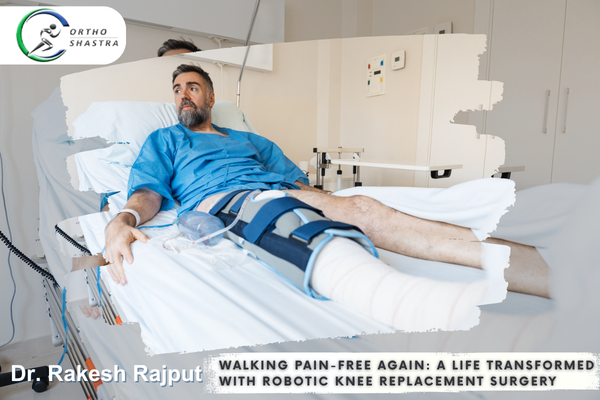
Introduction: When Knee Pain Takes Over Life
At 62, Sunita Sharma was known for her independence and energy. From morning walks to managing her home, she led an active and fulfilling life.
But gradually, persistent knee pain began interfering with even the simplest activities. Walking short distances became exhausting, climbing stairs was painful, and prolonged sitting caused stiffness.
What once felt like a minor issue slowly turned into a condition that limited her freedom and affected her emotional well-being.
Struggles & Ineffective Treatments
Initially, Sunita relied on conservative treatments, hoping to avoid surgery. She tried:
- Pain medications
- Physiotherapy
- Joint supplements
Despite these efforts, her condition worsened. The pain became constant, and her mobility reduced significantly. Everyday life turned into a struggle, and she began losing confidence in her own body.
Expert Consultation & Diagnosis
Determined to find a lasting solution, she consulted Dr. Rakesh Rajput, a renowned orthopedic and robotic joint replacement surgeon.
After a detailed clinical evaluation and imaging tests, she was diagnosed with advanced Osteoarthritis—a condition where the protective cartilage in the knee joint wears down, leading to pain, swelling, and stiffness.
Dr. Rajput explained her condition in a simple and reassuring manner, helping her understand the need for advanced treatment.
The Decision: Choosing Robotic Knee Replacement
Considering the severity of joint damage, Robotic Knee Replacement Surgery was recommended.
While the idea of surgery initially made her anxious, the doctor’s expertise and the precision offered by robotic technology gave her confidence.
With trust and hope, she decided to proceed.
Understanding Robotic Knee Replacement
Robotic-assisted knee replacement is an advanced technique that enhances surgical precision and outcomes.
Key Benefits:
- Greater accuracy in implant placement
- Minimal tissue damage
- Reduced pain and faster recovery
- Improved joint function and longevity
This advanced orthopedic care approach ensures better alignment and a more natural feel after surgery.
Recovery Journey: From Pain to Progress
Sunita’s recovery journey was smooth and encouraging:
- Within 2–3 days: Began walking with assistance
- First few weeks: Noticeable reduction in pain and improved mobility
- With physiotherapy: Gradual strengthening of muscles
- Within 4–6 weeks: Returned to most daily activities
Each day brought renewed strength, confidence, and independence.
Final Outcome: A New Lease on Life
Today, Sunita Sharma enjoys a pain-free, active life once again. She has regained her independence and can perform daily tasks without discomfort.
Her journey is a testament to how modern knee pain treatment and advanced orthopedic care can truly transform lives.
Frequently Asked Questions (FAQ): Knee Replacement & Osteoarthritis
🔹 When is knee replacement surgery recommended?
It is advised when chronic knee pain from Osteoarthritis does not respond to medications, physiotherapy, or injections and significantly affects daily life.
🔹 What makes robotic knee replacement different?
Robotic surgery offers enhanced precision, better alignment, and improved long-term outcomes compared to conventional techniques.
🔹 Is knee replacement surgery safe?
Yes, it is a well-established and safe procedure. Robotic assistance further minimizes risks and improves accuracy.
🔹 How long does recovery take?
Patients usually begin walking within a few days and return to normal activities within 4–6 weeks, depending on individual recovery.
🔹 How long do knee implants last?
Modern implants typically last 15–20 years or longer with proper care and an active lifestyle.
Conclusion: Take the First Step Toward Pain-Free Living
Living with chronic knee pain can feel limiting—but it doesn’t have to be permanent. With advancements like robotic joint replacement and the expertise of specialists like Dr. Rakesh Rajput, patients can reclaim their mobility and independence.
Sunita’s journey shows that the right treatment at the right time can restore not just movement—but also confidence, joy, and quality of life.
Don’t ignore persistent knee pain. Seek expert advice and take your first step toward a healthier, more active future.